Because prostate cancer is a leading form of cancer among men in the U.S., prostate cancer prevention is very important to Winship Cancer Institute of Emory University. Our team is finding ways to prevent this common cancer.
Preventing Prostate Cancer
Prostate cancer is the most common cancer among men in the United States.
While experts are still working to uncover prostate cancer prevention strategies, it is largely treatable when caught early. Prostate cancer, like other cancers, is caused when cells grow at an uncontrolled rate. Over time, this leads to the development of masses, or tumors, in the prostate gland.
Prostate Cancer Risk Factors
Knowing your prostate cancer risk factors and getting screened regularly can help you be proactive in diagnosing or preventing prostate cancer. Early diagnosis improves overall survival rates and outcomes.
Prostate cancer risk factors include:
Age. Prostate cancer is most common in men over the age of 50. About 6 in 10 cases are found in men over 65 in the U.S.
Race/ethnicity. Black men have the highest incidence of prostate cancer in the U.S.
Family history of prostate cancer. Prostate cancer can be hereditary. Having a brother or father with prostate cancer more than doubles your risk of getting the disease as well.
Geography. Prostate cancer is more common in North America, northwestern Europe, Australia and the Caribbean islands. So far, more research is needed to understand why this is.
Signs and Symptoms of Prostate Cancer
Prostate cancer usually shows very few signs and symptoms until the cancer has reached an advanced stage. When that occurs, the most common symptoms are:
Difficulty urinating
Blood in the urine or semen
Frequent urination (mostly at night)
Burning sensation when urinating
Erectile dysfunction
Pain in the lower back, pelvis, stomach or hips
Weakness in the legs
Fatigue
If you or a loved one are experiencing any of the above symptoms, call your doctor.
There is currently no way to completely prevent prostate cancer. Many of the most common prostate cancer risk factors — older age, ethnicity and family history — cannot be changed. But adopting certain lifestyle habits may help lower your risk.
These healthy habits include:
Not smoking. If you smoke, take the steps to quit.
Maintaining a healthy weight. There is some evidence to suggest that obesity may increase a person’s risk for prostate cancer. If you are overweight or obese, talk with your doctor about implementing a weight loss plan.
Eating a well-balanced diet. Studies have shown that high-fat diets may increase a person’s risk for prostate cancer. Choose a low-fat diet and limit processed and fatty foods, red meat and dairy. Eat a diet that is rich in fruits, vegetables and whole grains.
Exercising regularly. Aim for at least 30 minutes a day, 5 days a week of moderate exercise.
Limiting alcohol. The American Cancer Society (ACS) strongly recommends that people do not drink. If you do drink alcohol, the ACS recommends no more than two drinks per day for men.
These five senses are your link to the world around you. But did you know they’re also the key to cultivating more mindfulness in your daily life?
If you’ve ever been curious about the concept of grounding exercises—specifically the 5 senses grounding technique—we’re about to explore how to integrate this mindfulness technique into your daily routine to help you embrace the power of the present.
The 5 senses grounding technique is a mindfulness exercise that can help you become more present and aware of your surroundings and even reduce feelings of anxiety or stress.
It involves focusing on what each of your five senses—sight, sound, touch, smell, and taste—can pick up on in any given moment.
So, how exactly do you do the 5 senses grounding technique? Here is our step-by-step guide to help you get started:
Find a quiet and comfortable space where you can sit, stand, or lie for a few minutes.
Take a few deep breaths, and focus on your breath.
Turn your attention to your sense of sight. Look around and notice five things you can see, paying attention to colors, shapes, and textures.
Move on to your sense of touch. Notice four things you can touch, focusing on their temperature, texture, and weight.
Next, focus on your sense of sound. Listen for three things you can hear, and try to identify where they’re coming from and what they sound like.
Move on to your sense of smell, and identify two things you can smell. You might breathe in deeply or just notice an aroma faintly.
Finally, focus on your sense of taste. Notice one thing you can taste, whether it’s the lingering taste of your toothpaste or maybe your morning coffee.
As you go through each sense, try to stay present and non-judgmental. If your mind wanders or negative thoughts arise, simply acknowledge them and gently refocus your attention on your senses.
This 5 senses grounding technique can be done anytime, anywhere: before a stressful event, during a break at work, or even in bed before going to sleep. With regular practice, it can help reduce your anxiety, interrupt negative thought patterns, and increase feelings of calmness and well-being.
But don’t just take our word for it. Try using all five of your senses now during this 54321 grounding exercise:
So, why should you practice the 5 senses grounding technique?
There are many benefits of grounding techniques. Specifically, research has shown that they aid in stress relief, emotional regulation, and improved focus.
Stress relief
When you’re feeling overwhelmed or anxious, your thoughts can become scattered and unfocused, leading to even greater feelings of stress. But by taking a few minutes to practice the 5 senses grounding technique, you can bring your attention back to the present moment and away from stressful thoughts. This can help you feel calmer and more centered.
Improved emotional regulation
By focusing on physical sensations in the body—such as the feeling of the sun on your skin or the taste of a piece of fruit—you can move your attention from your mind and into your felt experience. This increased awareness and improved mind-body connection can help you identify when you’re feeling stressed, anxious, or overwhelmed, which will allow you to take steps to regulate those emotions before they become overwhelming.
Improved focus and productivity
By practicing mindfulness techniques like this one regularly, you can train your brain to stay focused on one task at a time. This can help you avoid distractions and be more efficient in your daily life.
Overall, the 5 senses grounding technique is a simple but powerful tool for managing stress, regulating emotions, and improving focus. And with regular practice, you can develop greater self-awareness and emotional regulation skills that can help you navigate life’s challenges with ease.
Here are some practical tips to help you get started:
Set aside a specific time to practice: To make the 5 senses grounding technique a regular habit, incorporate it into activities you’re already doing. This could be during your lunch break or before your morning meeting with your boss. Just remember: It doesn’t have to be a lengthy practice. Even just a few minutes each day can have a positive impact on your mental health.
Practice when you’re feeling stressed: The 5 senses grounding technique is an excellent tool for managing stress and anxiety in the moment. When you feel yourself becoming overwhelmed, take a few deep breaths and focus on your senses to ground yourself in the present moment.
Use it as a way to start or end your day: Starting or ending your day with the 5 senses grounding technique can be a great way to set the tone for your day or wind down at night. You could try practicing it as soon as you wake up or before you go to bed.
Practice in nature: Practicing the 5 senses grounding technique in nature can enhance your connection to the environment and provide additional benefits for your mental health. Find a quiet spot outside and take in all the sights, sounds, smells, textures, and tastes around you.
Even if you have a busy schedule, it is possible to create a daily grounding routine. And to help you kick things off and hold yourself accountable, you could try setting reminders on your phone, adding it to your to-do list or calendar, or using a guided meditation app.
Using a guided meditation app like the Balance app for mindfulness is an excellent way to support and enhance your practice. Balance makes experimenting with different grounding exercises easy since it includes a variety of features, breathing exercises, and meditations, all tailored to you and your exact needs.
More specifically, Balance offers a guided 5 senses grounding meditation that can help you practice this grounding technique regularly—it’s called Quick Refocus, and it only takes a few minutes to complete. (Seriously, just 3 or 5 minutes!)
You can use Quick Refocus when you need an immediate boost of concentration, when you’re feeling mentally foggy, when you’re stressed or anxious, or before an important conversation. You’ll use your senses to tune into your surroundings, which can improve your ability to, well, quickly refocus your attention where you want it to go.
By using the 5 senses grounding technique and focusing on each sense, one at a time, you can become more present and aware of your surroundings, reduce feelings of stress or anxiety, and improve your emotional regulation and focus in just 5 minutes or less each day. And who doesn’t want more of that in their life?
If you’re ready to enhance your mindfulness practice and experience the benefits of grounding techniques for yourself, download the Balance app. It includes a whole library of research-backed grounding meditations and breathing exercises that you can use anytime, anywhere. Take the first step toward a more mindful life by downloading Balance today!
Dr Rena Malik Wiki Age Husband Family Biography More Wikibio
Dr Rena Malik Wiki Age Husband Family Biography More Wikibio What happens during orgasmbetter orgasms shorts pelvicfloormuscles orgasmplaylist dark feminine energy music mafia boss vibe what is orgasm what does it feel. Dr. rena malik breaks down the research behind the best sexual position to help your female partner reach orgasm most effectively and frequently. news today’s news us politics world.
Dr Rena Malik Age Husband Family Biography More Starsunfolded
Dr Rena Malik Age Husband Family Biography More Starsunfolded In this podcast episode, dr. rena malik, a board certified urologist, shares her expertise on various aspects of sexual health, intimacy, and the complexities surrounding orgasms. the conversation delves into the nuances of sexual experiences, the importance of communication, and the physiological factors that influence pleasure. – dr. rena malik just wash hair bearing areas and that’s it transdermal testosterone (1 10 of male dose) can improve sexual desire but only indicated once you’ve eliminated other causes of low libido 1:35:00 – female orgasm there are different types of female. Today’s guest, dr. rena malik, is a board certified urologist with a passion for dispelling health misconceptions, sharing the truth about intimate topics, and empowering the public. on this episode of the model health show, she’s sharing her expertise on the importance of sexual health, how to treat sexual dysfunction, and the truth about pleasure. Female sexual response: detailed exploration of female sexual arousal, vaginal health, and the neural origins of orgasm. utis and other urological issues : tips for preventing and managing urinary tract infections (utis), preventing kidney stones, and insights into prostate and bladder health.
Dr Rena Malik Wiki Husband Height Age Career Net Worth Kids Bio
Dr Rena Malik Wiki Husband Height Age Career Net Worth Kids Bio Today’s guest, dr. rena malik, is a board certified urologist with a passion for dispelling health misconceptions, sharing the truth about intimate topics, and empowering the public. on this episode of the model health show, she’s sharing her expertise on the importance of sexual health, how to treat sexual dysfunction, and the truth about pleasure. Female sexual response: detailed exploration of female sexual arousal, vaginal health, and the neural origins of orgasm. utis and other urological issues : tips for preventing and managing urinary tract infections (utis), preventing kidney stones, and insights into prostate and bladder health. This episode is as intimate as it gets. we sat down with dr. rena malik, a medical doctor who specializes in urological health to get her clinical perspective on women’s shared experiences that are rarely talked about. in this episode you’ll learn: * the #1 thing that. Dr. rena malik, urologist and pelvic surgeon, explores the nuanced impacts of pornography on sexual health and relationships. she discusses scientific findings on both benefits and risks, motivations for use, effects on the brain, issues of shame and moral conflict, and offers practical tips for healthy consumption and communication with partners.
Dr Rena Malik Wiki Husband Height Age Career Net Worth Kids Bio
Dr Rena Malik Wiki Husband Height Age Career Net Worth Kids Bio This episode is as intimate as it gets. we sat down with dr. rena malik, a medical doctor who specializes in urological health to get her clinical perspective on women’s shared experiences that are rarely talked about. in this episode you’ll learn: * the #1 thing that. Dr. rena malik, urologist and pelvic surgeon, explores the nuanced impacts of pornography on sexual health and relationships. she discusses scientific findings on both benefits and risks, motivations for use, effects on the brain, issues of shame and moral conflict, and offers practical tips for healthy consumption and communication with partners.
Embark on a financial odyssey and unlock the keys to financial success. From savvy money management to investment strategies, we’re here to guide you on a transformative journey toward financial freedom and abundance in our Pro Tips On The Female Orgasm Dr Rena Malik section.
https://www.youtube.com/embed/btcFVlGqzKcPro tips on the female orgasm! | Dr. Rena Malik
Pro tips on the female orgasm! | Dr. Rena MalikPro tips on the female orgasm! | Dr. Rena Malik Have you heard of this myth?! Dr. Rena Malik: Improving Sexual & Urological Health in Males and Females Science Explains How Orgasms Might Be Better Than Kegel Exercises Wondering what happens to a female body during orgasm? A Urologist explains… Positions to Maximize Pleasure During Sex, According to Science You Will Never Believe What Women Actually Feel when They Squirt! Estrogen can protect from a heart attack Do all Women Need Testosterone in Menopause? Urologist Breaks Down the Science A Urologist On Improving Erections, No Nut November, and Low Testosterone | Dr. Rena Malik Do you really need to do Kegels? Does ashwaganda really help sex drive, libido and erections?! A urologist breaks it down Org@sm, the ultimate state of blissful attention Unlocking the Secrets of Female Anatomy | Dr. Rena Malik Get Better Erections & Stronger Orgasms with a Healthy Pelvic Floor ft. Julie Sarton Everything you need to know about Sildenafil vs Tadalafil for erectile dysfunction | ED pills female orgasm | Female anatomy and biology The #1 cause of low libido in men What makes a good surgeon?
Conclusion
All things considered, it becomes apparent that this particular piece offers helpful awareness about Pro Tips On The Female Orgasm Dr Rena Malik. From beginning to end, the content creator manifests profound insight concerning the matter. Particularly, the section on notable features stands out as a key takeaway. The discussion systematically investigates how these aspects relate to provide a holistic view of Pro Tips On The Female Orgasm Dr Rena Malik.
In addition, the essay is noteworthy in deconstructing complex concepts in an straightforward manner. This comprehensibility makes the information beneficial regardless of prior expertise. The content creator further amplifies the presentation by inserting related scenarios and practical implementations that provide context for the theoretical constructs.
A supplementary feature that distinguishes this content is the exhaustive study of several approaches related to Pro Tips On The Female Orgasm Dr Rena Malik. By considering these various perspectives, the content offers a balanced view of the theme. The completeness with which the creator approaches the theme is genuinely impressive and provides a model for related articles in this subject.
Wrapping up, this article not only teaches the observer about Pro Tips On The Female Orgasm Dr Rena Malik, but also prompts deeper analysis into this intriguing subject. For those who are a beginner or a specialist, you will come across valuable insights in this extensive content. Many thanks for taking the time to the write-up. If you have any questions, please feel free to reach out via our messaging system. I anticipate hearing from you. In addition, you will find a few associated pieces of content that you may find helpful and additional to this content. Hope you find them interesting!
UNTIL YOU’RE READY to have a child, you might not think much about the health of your sperm. That was true for Colton Underwood, former star of “The Bachelor.” He recently opened up about his infertility and the “sperm rehab” he committed to, as he and his husband set out on the path to fatherhood.
Underwood told Men’s Health that he hoped to raise awareness about men’s struggles with sperm counts and fertility—something that affects about 15 percent of men. A 2020 study review found that sperm counts have dropped more than 50 percent globally in the past five decades.
There are ways to tell how healthy your sperm is—but looking at it isn’t one of them. “A semen analysis is one of the best ways to determine if you have healthy sperm,” says reproductive endocrinologist Asima Ahmad, M.D., chief medical officer and co-founder of Carrot Fertility.
More From Men’s HealthBody Recomposition | Recomp | Men’s Health Muscle
The test measures the quality and quantity of your semen and sperm to help you uncover a fertility issue. It’s the most accurate way to know where your sperm stands.
“A sperm specimen needs to be collected and looked at through a microscope to evaluate if it’s healthy,” says Kaylen Silverberg, M.D., a reproductive endocrinologist at Texas Fertility Center in Austin. “That’s because the factors that indicate healthy sperm can’t be seen with the naked eye.”
Several factors can affect your sperm quantity and quality, including age, medications, health conditions, diet, exercise levels, and testosterone levels, explains Dr. Ahmad. Here’s what you should know about healthy sperm and some signs that yours might be doing well.
What Does Healthy Sperm Look Like?
FIRST, IT’S IMPORTANT to know the difference between semen and sperm. Semen is the thick, white substance released when you ejaculate. Semen contains sperm, which are the cells that include genetic material needed to reproduce.
According to Dr. Silverberg, when your doctor checks the health of your sperm, they’re primarily looking at three factors:
Sperm count: The number of sperm in a volume of semen.
Sperm motility: The percentage of sperm that are alive and swimming.
Sperm morphology: The percentage of sperm with a healthy size and shape.
Sperm is examined under a microscope to see if they’re “using their tail to swim in a straight line,” explains Lauren Bishop, M.D., a reproductive endocrinology and fertility specialist at Columbia University. “They will also look at the head to make sure it appears oval. The tail should be long and move smoothly through the fluid.”
A normal semen analysis consists of a sperm concentration of at least 15 million sperm per millimeter of semen, motility of at least 30 percent, and at least 4 percent normally shaped sperm, according to the World Health Organization. A low sperm count or sperm that doesn’t move well could lead to infertility.
While you can’t tell by looking at your semen if it contains healthy sperm, Dr. Ahmad suggests talking to your doctor if you notice any changes, such as that semen is thicker or waterier than usual, discolored yellowish or greenish, or contains traces of blood. This might signal an infection, injury, or something else.
Signs That You Likely Have Healthy Sperm
SEVERAL HABITS AND characteristics are associated with healthy sperm. Still, the only way to truly know how healthy yours is is to get tested. But, here are some signs your sperm may be healthy:
You hit the gym regularly.
Men who get their blood pumping with moderate to vigorous exercise have a higher sperm concentration than guys who don’t work out at that intensity, research shows. Exercise may increase the expression of antioxidants throughout the body, so regular gym sessions could actually prevent free radicals from damaging sperm cells.
Regular exercise also helps you maintain a healthy weight, Dr. Ahmad says. This could lower your risk for obesity and other chronic health conditions, which have been shown to lower sperm counts.
You have a slimmer waistline.
Research shows that a larger male waist circumference has been linked to lower sperm counts. Carrying too much weight in your midsection could interfere with the release of sex hormones, as well as the production and development of sperm.
“If someone has a smaller waistline as compared to someone who may have obesity or metabolic syndrome with a larger waistline, the former may have better sperm quality, but other things need to be taken into consideration beyond that,” Dr. Ahmad explains.
You have a softer-looking face.
Having a masculine-looking mug might actually hurt you below the belt, according to a study in the Journal of Evolutionary Biology. The researchers discovered that men who had faces that were rated as manly—i.e., wider and broader—tended to have poorer semen quality than more feminine-faced guys.
One possible reason is the “trade-off hypothesis.” Simply put, men have a fixed amount of energy available to devote to reproductive resources, and that energy must be distributed to a number of different components.
“If a male consumes more resources on semen production, he may have fewer resources available for developing attractive secondary sexual traits, like facial masculinity,” says study author Jukka Kekäläinen, Ph.D.
You stay away from saunas and hot tubs.
The scrotum is a few degrees cooler than the core body temperature, which is ideal for sperm, Dr. Ahmad says. Activities like saunas, hot tubs, or hot baths could increase the temperature of the testes and potentially lower sperm count.
In a 2013 study, healthy Finnish men with normal sperm counts spent 15 minutes in a sauna a few times a week for three months and experienced lower sperm counts. The saunas lowered their scrotal temps by 5.4 degrees Fahrenheit. The decrease lasted for about three months but returned to normal after six months. The study didn’t track their fertility, however.
You take steps to protect yourself from Covid.
Research presented at the 2023 annual meeting of the European Society of Human Reproduction and Embryology found that men who had Covid had lower sperm counts for longer than three months after they recovered—and the sperm they do have are not strong swimmers.
Sperm counts can dip by as much as 20 percent. The study authors believe the findings mean Covid could be capable of doing long-term damage to the male reproductive tract, even for men who’ve had mild cases. This is most likely due to the inflammation the virus triggers.
Prevention is key. Keep track of how much Covid is circulating where you are, when new variants emerge, and when the numbers climb, mask up indoors or in crowds. Also keep up with your vaccinations.
You love to eat fish—and generally have a healthy diet.
If your favorite protein sources are bacon and sausage, your semen might be paying the price. Research has shown that men who eat the most processed meat have significantly lower counts of normal-shaped sperm compared to those who consume the lowest amounts.
Fish, on the other hand, could have a protective effect. Guys who ate the most fish—especially salmon and tuna—had a 65 percent greater sperm concentration than those who ate the least.
Credit fish’s omega-3s, since long-chain polyunsaturated fatty acids play a role in sperm production, the researchers say. So, if you’re looking to strengthen your swimmers, sub out your pepperoni pizza topping for anchovies.
An overall healthy diet full of fresh fruits and vegetables and whole grains can also positively impact your sperm. Dr. Ahmad says the Mediterranean diet is one of the best for fertility and health in general.
You skip the briefs.
A 2018 study found that men who wore boxer shorts instead of tight-fitting underwear had 25 percent higher sperm concentrations and 17 percent higher sperm counts than those who wore briefs.
Loose-fitting underwear may lower the temperature of your scrotum, where the testicles are located, and improve semen quality, the study suggests. There’s also evidence that elevated testicular temperatures may hinder sperm production, he says. So if you want to be on the safe side, let your junk breathe.
Your job is physical.
A 2023 study found that guys who do heavy lifting at work (literal heavy lifting, like moving weighty objects) had 46 percent higher sperm concentration and 44 percent higher total sperm count than men who have more sedentary jobs.
If you don’t happen to work on a construction site or pack moving vans, add weights to your workout, increasing the pounds you lift gradually to garner some of the same benefits.
Your voice isn’t super deep.
Researchers found that while women rated low-pitched voices as more masculine and attractive, husky-voiced men had lower concentrations of sperm in their ejaculate, according to a study published in PLOS One.
Testosterone levels may be one possible explanation for this, according to the study. Testosterone is associated with more masculine facial features and lower voices, but too much of it might actually suppress sperm production.
You avoid smoking and drinking too much alcohol or caffeine.
Taking drugs, smoking, drinking alcohol excessively, and a hefty caffeine intake can all affect sperm negatively, Dr. Ahmad says.
Minimizing or cutting out these habits could improve sperm quality, she adds. Millions of new sperm are being produced each day, and it takes about three months for a sperm to reach full maturity.
“Therefore, if someone was a heavy smoker and had a poor semen analysis and then quit and rechecked his sperm in four months, it wouldn’t be surprising to see an improvement,” Dr. Ahmad says.
You try to avoid single-use plastics.
You’ve probably been hearing a lot about microplastics. A 2024 study published in Toxicological Sciences found significant traces of 12 kinds of microplastics in human and canine testes. Experts believe this could be connected to declining sperm counts.
Another study found that men who had the highest levels of BPA (or, bisphenol A, a chemical found in plastics) in their urine had a significantly lower percentage of motile sperm.
Scientists aren’t exactly sure what’s behind the semen squeeze, but they think BPA might affect the estrogen and androgen activity in the epididymis in the testicles. And this could hinder the normal development of sperm.
When to Get Your Sperm Checked Out
IT’S ALWAYS A good time to educate yourself about your fertility, Dr. Ahmad says. So, any time you’re worried about the health of your sperm, ask your doctor about getting a semen analysis.
It might also good idea to get checked if you’re dealing with a chronic medical condition, such as obesity or type 2 diabetes, and want to have children one day, she adds. These conditions can affect your sperm health.
Doctors can recommend the best course of action if an abnormality is found, such as further testing or lifestyle modifications, Dr. Ahmad says.
Your hands speak volumes, especially when something’s not working right, such as having itchy, stiff, or red hands. Their form, function, and appearance can offer important prognostic and diagnostic clues.
You can learn a lot about your health by looking at your hands. Certain medical conditions and diseases can present with various symptoms in your hands. Here’s what these hand signs and symptoms could mean.
Having red hands, also called palmar erythema, Lane’s disease, liver palms, or red palms, can be hereditary. Red hands can also be a symptom of various conditions, including pregnancy, liver disease, or an autoimmune disorder like rheumatoid arthritis or Graves’ disease.12 Red hands have also been reported as a symptom of COVID-19.3
Typically, redness occurs on both hands and is not painful or itchy. Redness is caused by dilated capillaries and may be influenced by changing hormone levels, which is why the condition is more common in pregnant people.4
Some people have red hands from birth, which is likely hereditary.2 If you develop the symptom later in life, consult a healthcare provider to determine the cause and if any treatment is needed.
Hand Rash
A red rash on your hand or wrist might indicate a nickel allergy, sometimes morphing into oozing blisters. Sensitivity to nickel is one of the most common causes of allergic contact dermatitis.5 Allergic contact dermatitis is a skin condition that causes a rash when your skin comes into contact with an allergen.
Many everyday objects touching your skin—such as bracelets, watches, rings, and cell phones—contain nickel. You can also develop a hand rash from ingesting foods containing nickel.5
Foods that contain high amounts of nickel include:5
Buckwheat
Cashews
Cocoa powder
Licorice
Soy products (such as soy sauce, tofu, and soybeans)
Some things may up your chances of developing allergic contact dermatitis, including how old you are, what you do for work, and whether you have a history of atopic dermatitis, aka eczema.6
Atopic dermatitis is a chronic (long-lasting) skin condition that can appear as a rash on the hands. The skin can become inflamed, red, irritated, and extremely itchy. Flares—when the disease is worse—are often followed by periods of clear skin.7
It’s unsure what causes atopic dermatitis, but it seems related to your genetics, immune system, and environment. The disease usually appears during childhood, and many children are free of symptoms by the time they are teenagers. Some people, however, develop it when they’re adults.7
You’re more likely to get atopic dermatitis if someone else in your family has it, hay fever, or asthma. It also seems to be more common in non-Hispanic Black children and females.7
See a dermatologist or other healthcare provider to get tested and treated if you suspect you have a nickel allergy or atopic dermatitis.
Finger Clubbing
Finger clubbing is a change to the nailbeds that may indicate underlying health conditions. Finger clubbing symptoms include:8
Large, bulging fingertips that may be red and warm to the touch
Rounded nailbeds
Sharpened angle between the nailbed and cuticle
Softened nailbeds that look like they are detached from the finger
Finger clubbing commonly occurs with heart or lung disease if less oxygen is in the blood. For example, lung cancer, endocarditis, and congenital heart defects may cause finger clubbing.8
Consult a healthcare provider if you develop finger clubbing. Treatments can swiftly get rid of changes to the nailbeds. However, a healthcare provider may also want to run tests for any underlying health conditions.8
Dermatomyositis is a rare skin and muscle disease. In addition to joint swelling, it can produce a rash and muscle weakness. Its cause is unknown, but factors like genetics and the environment seem to be involved.9
Inflammatory bowel disease (IBD) is a term that includes Crohn’s disease and ulcerative colitis. In addition to causing inflammation of the gastrointestinal tract, IBD can cause joint pain and swelling (arthritis) or only joint pain (arthralgia). The pain and swelling are more likely to affect your large joints like your elbows, wrists, knees, ankles, or spine.10
Psoriatic arthritis is a chronic, inflammatory disease of the joints. The joint swelling is accompanied by dry, red, and flaky skin. You could have relatively few skin lesions but many affected joints. Psoriatic arthritis often shows up from ages 30 to 50 years, usually about 10 years after psoriasis shows up.13
Rheumatoid arthritis has similar symptoms to psoriatic arthritis but without skin lesions. Instead, it usually appears in the same place on both sides of your body. It can also affect your knees, ankles, elbows, feet, cervical spine, and jaw. Its cause may be a combination of genetic risk factors, environmental factors, and abnormal immune responses.12
Hand Tremors
Sometimes, hand shakiness is no big deal. Other times, tremors can be a sign of neurologic disease.
Everyone has a slight shakiness in their hands, known as a physiologic tremor. You may notice shakiness when doing something precise, like threading a needle. Shakiness becomes more noticeable if you are sleep-deprived, over-caffeinated, taking certain medicines, or going through alcohol withdrawal.
Another type of tremor, called essential tremor, causes hand and arm shakiness on both sides of the body. Essential tremors often run in families and are present whenever someone performs a manual task like eating.14
There are also various disease-related tremors. Parkinsonian tremor, for example, occurs with Parkinson’s disease, a neurological disorder that damages cells in the brain. Parkinsonian tremors usually involve one hand or are more prominent in one hand. The tremor occurs when the hand is at rest.15
Numb or Tingly Hands
Pins and needles in your hands are likely carpal tunnel syndrome if you are young and healthy. Other carpal tunnel syndrome symptoms include:16
Hand weakness
Dropping things
Shock-like sensations that radiate to the thumb, index, middle, and ring fingers
Many people have nighttime tingling or numbness if they sleep with their wrists bent. That bend compresses the median nerve from the wrist to the hand, leading to carpal tunnel syndrome.
A healthcare provider may order an electromyogram (EMG) to look for nerve or muscle damage. Carpal tunnel syndrome treatments range from splints to surgery.16
There are many other reasons for hand numbness and tingling. For example, you might experience temporary tingling or trembling if you have a panic attack.17
One cautionary note: Any sudden onset of numbness or weakness (of the arms or hands) is a potential sign of a stroke. In that event, call 911.18
You may have endocarditis if you have painful red or purple bumps on your fingertips called Osler nodes. Endocarditis is a severe but rare disease that causes inflammation of the lining of your heart. Endocarditis can also cause bleeding under the skin of the palms, leaving painless red spots.1920
Healthcare providers look for nail findings with endocarditis, such as Janeway lesions and splinter hemorrhages. Janeway lesions are dark spots that indicate bleeding under the skin, usually at the bottom of the thumb and pinky finger. Splinter hemorrhages are narrow lines under the nails that appear red or reddish-brown.21
Skin symptoms can come and go. Usually, symptoms are signs of infection. Other symptoms of endocarditis include:20
Cough
Fever and chills
New or worsening heart murmur
Shortness of breath
Endocarditis is most often caused by bacterial infections but can also be caused by fungal infections. You may be more likely to develop it if you have certain heart conditions, a weakened immune system, and poor dental health.20
See a healthcare provider right away if you have those symptoms. Endocarditis can lead to serious health problems like heart failure and sepsis.20
Red Scales or Pus-Filled Bumps
Psoriasis is a chronic autoimmune condition that causes patches of thick red skin and silvery scales. Skin lesions can show up on the hands or nails.22
Psoriasis that shows up on the hands or feet, medically known as palmoplantar psoriasis, can cause considerable discomfort. Sometimes, it can be accompanied by pus-filled blisters or lead to painful cracking and fissuring. Nail changes, like pitting, crumbling, thickening, discoloration, or separation of the nail from the nail bed, can also occur.23
Adults are most affected by psoriasis, but children can get it, too. Psoriasis seems to affect all people equally, regardless of sex.22
See a dermatologist or healthcare provider if you have or think you may have psoriasis. You can get help managing your symptoms and finding a treatment option that works for you.
Trigger Finger
Trigger finger, called stenosing tenosynovitis, means you have a finger that pops, catches, or gets stuck when you try to bend and straighten it. Due to repetitive use, trigger finger affects the ring finger or thumb most often.
Trigger finger occurs when a tendon—a rope-like structure connecting bone to muscle—or the tunnel it runs through becomes inflamed. That inflammation makes it hard for the tendon to move.24
Anyone can get a trigger finger. Still, trigger finger is more common in people with health conditions like:25
Weak hand strength may mean a side effect of aging. In addition to several other changes in the body, losing muscle mass is a part of getting older.26
Your hands’ strength may have something to do with your overall health. Research suggests people with weaker hands are more likely to have poor health outcomes, such as dying from all causes, including cardiovascular disease.27
Evidence suggests a stronger hand grip may indicate healthy heart function and structure. Based on those findings, researchers suspect hand grip could one day become a useful measure for identifying people at high risk of developing heart disease.28
You can’t prevent some of the effects of aging, but you may be able to affect how slow or fast you age. The key is lifestyle. To slow age-related changes, exercise regularly, eat healthy foods, limit alcohol, and avoid tobacco. By doing these things, you’ll be keeping your body strong and healthy as you age.
White, Blue, or Red Fingers
You may have Raynaud’s if your fingers lose their color and then turn blue when you are cold or stressed. This phenomenon can cause the blood vessels in your limbs to narrow, resulting in a temporary loss of blood flow. It usually affects your fingers and toes.29
Raynaud’s can make your fingers feel numb, cold, or painful. As blood flow resumes, your digits may throb or tingle and turn red.29
The more common type of Raynaud’s has no known cause. It’s most likely to show up in people of the female sex who are in their teens to 30s. People with a family member with Raynaud’s are at a higher risk of developing it themselves.29
The less common type is caused by a specific problem, like diseases and medication. Diseases that can lead to Raynaud’s include:
Some medications may cause similar symptoms or make underlying Raynaud’s worse. Meds for high blood pressure, migraines, and attention-deficit/hyperactivity disorder are included in this group.29
Your hands can tell you a lot about your health. Hand conditions may be a sign of an underlying disease. For example, a rash on your hand may mean you are experiencing an allergic reaction to nickel or other allergen. Hand pain may be related to inflammatory conditions like arthritis.
Take any problems with your hands or any changes to the skin on your hands seriously. Consult a healthcare provider who can determine the cause and give you the right care for your needs.
Experts Share the 6 Best Vitamins and Minerals for Older Adults
We talked to experts and got the scoop. Here are the best supplements for aging gracefully.
Lara Vukelich
Medically Reviewed
May 20, 2025 11:00 a.m. PT
6 min read
Your body needs different vitamins and minerals as it ages. Isabel Pavia/Getty Images
It’s no secret that we need lots of vitamins and minerals to stay healthy. If you have a balanced diet, chances are you’re already getting enough nutrients. However, that can change as we age and our bodies demand more. Older people are at an increased risk for low vitamin consumption — partly because our bodies can no longer effectively absorb certain nutrients. So, if you’re dealing with deficiencies, are on specific medications or have particular health conditions, your doctor may advise you to take certain supplements to make sure your body has all the nutrients it needs.
These are the top six vitamins and minerals that doctors recommend you focus on for healthy aging. Just be sure to talk to your doctor first before adjusting your diet or trying new supplements.
Magnesium is a mineral that provides several key functions in the body. It keeps your muscles strong, regulates blood sugar levels and contributes to heart health. Dr. Jacob Teitelbaum, a board-certified internist in integrative medicine, told us that “magnesium is critical for well over 300 reactions in the body.”
He said an unprocessed diet has about 600 mg of magnesium daily, but the average American diet has less than 250 mg of magnesium after processing. For reference, the daily recommended amount of magnesium is 400 to 420 mg per day for adult men and 310 to 320 mg for women, but more is needed for those who are pregnant or breastfeeding.
Teitelbaum warned that the effects of low magnesium may include an increased risk of metabolic syndrome. This can lead to heart attacks, strokes and dementia. You may also feel exhausted or experience widespread muscle pain if you’re not getting enough magnesium.
You can find magnesium in a wide range of ingredients. Dr. Peter Brukner, a specialist sports and exercise physician, said you can find magnesium in nuts, seeds, whole grains and leafy green vegetables like spinach. In extra yummy news, you can also get magnesium from dark chocolate.
“Some older adults or those who take specific medicines (such as diuretics or drugs for acid reflux) may not receive enough magnesium from their diet and might need a supplement,” he said. “However, too much magnesium can cause stomach issues, so be careful.”
You also need a range of B Vitamins, including B12 and folate (also called folic acid), to maintain your health as you age. Vitamin B-12 works with folate to help your body make new cells, including blood cells and nerve cells. While you don’t usually require more B12 as you age, your body cannot absorb it as well when you get older. Brukner said this is because “stomachs make less acid, and this acid is necessary to take the vitamin from food into the body.”
Teitelbaum said B vitamins are critical for energy production, and suboptimal levels can affect your health. He warns that B vitamin deficiency has been associated with “a marked increase of dementia (especially folic acid) and increased risk of heart attack and stroke (especially in those with elevated homocysteine levels).” Symptoms of B12 deficiency include weakness or poor balance, loss of appetite and numbness and tingling in the hands and feet.
B12 is found in animal proteins like meat, fish and eggs. Brukner said that if you don’t eat these foods, you may want to turn to foods like cereals and nutritional yeast with added B12. “Older people, especially those having certain stomach issues or taking medicine that lowers stomach acid, might need to take a B12 vitamin supplement,” he explained.
Amelia Ti, a registered dietitian and diabetes educator in New York, who is also part of CNET’s Medical Review Board, adds that people taking medicine that blocks B12 absorption, like omeprazole or metformin, may also need a vitamin B12 supplement.
The National Institute on Aging says that calcium is especially important for older people at risk for bone loss. The Institute recommends 1,000 mg each day for men between the ages of 51 and 70, and 1,200 mg per day for men 71 and older. Women aged 51 and up are recommended to take 1,200 mg each day.
“Calcium is well-known for making bones strong, but it is also crucial for muscles to work right,” Brukner said. “As people become older, their bodies take in less calcium from food, which can cause bones to become weaker.” You can get calcium naturally from sources like milk, yogurt and cheese. The Harvard T.H. Chan School of Public Health notes that calcium is also available in kale, salmon, tofu, almonds and spinach.
As for supplements, Brukner said, “If you are at risk for bone troubles or don’t get enough calcium in your food, taking supplements might be useful. But too much calcium can cause other issues like kidney stones, so talk with your doctor first.”
Vitamin D is often called the sunshine vitamin because you typically absorb it through the skin just by being outside. However, during winter months, if you live in a cloudy climate or avoid natural sunlight as you age, you may not get enough. Your body needs vitamin D to properly absorb calcium, making it an important nutrient for bone health.
Brukner says that in addition to sunshine, you can get vitamin D from fatty fish like salmon and mackerel, fortified milk and cereals. Your doctor may also recommend a supplement if you’re experiencing bone loss or at risk of osteoporosis.
“Omega-3 fatty acids are very good for heart health and can help lessen swelling, which is important for older people,” Brukner explained. “They are also beneficial for brain well-being and might help guard against memory loss and diseases such as Alzheimer’s.” Ti adds that omega-3s help lessen swelling by reducing inflammation.
Fatty fish like salmon are a good source of omega-3 fatty acids. Brukner said you can also turn to flaxseeds, chia seeds and walnuts but added a warning: “These give a different type of omega-3 that the body does not use so easily.” Fish oil and algae oil can also serve as supplements.
A 2015 paper, published in Pathobiology of Aging and Age-related Diseases, calls zinc an “essential micronutrient for human health in general, and particularly for the elderly.” The authors say zinc plays “an important role in the aging process” and that zinc deficiency may be connected to several age-related chronic illnesses, which include hardening of the arteries, degenerative diseases of the nervous system, age-related changes to the immune system and cancer.
“When we get older, our immune system becomes weaker, and if we don’t have enough zinc, this can make it even worse,” Brukner explained.
You can find zinc in shellfish, red meat, poultry, beans, nuts and seeds. Brukner said oysters are particularly zinc-rich. He added, “Some older people might find zinc supplements helpful, especially if they often get sick or do not eat enough foods high in zinc. But taking too much zinc can cause problems with other minerals in the body, so it’s important to follow advised amounts.”
Eating well can help boost your bones, immune system and more as you age. Along with exercise and other good habits, getting the right minerals and vitamins may improve your health. Try to get enough magnesium, B vitamins, calcium, vitamin D, omega-3s and zinc in your diet each day. Talk to your doctor before you take any supplements to find out how they may interact with your existing medications and health conditions.
The information contained in this article is for educational and informational purposes only and is not intended as health or medical advice. Always consult a physician or other qualified health provider regarding any questions you may have about a medical condition or health objectives.
Cardiac amyloidosis is a condition where faulty proteins build up in your heart. You can inherit this condition, or it can develop on its own (usually later in life). As faulty proteins accumulate, your heart struggles to pump, ultimately leading to heart failure and death. However, this condition is usually treatable and in some cases is curable.
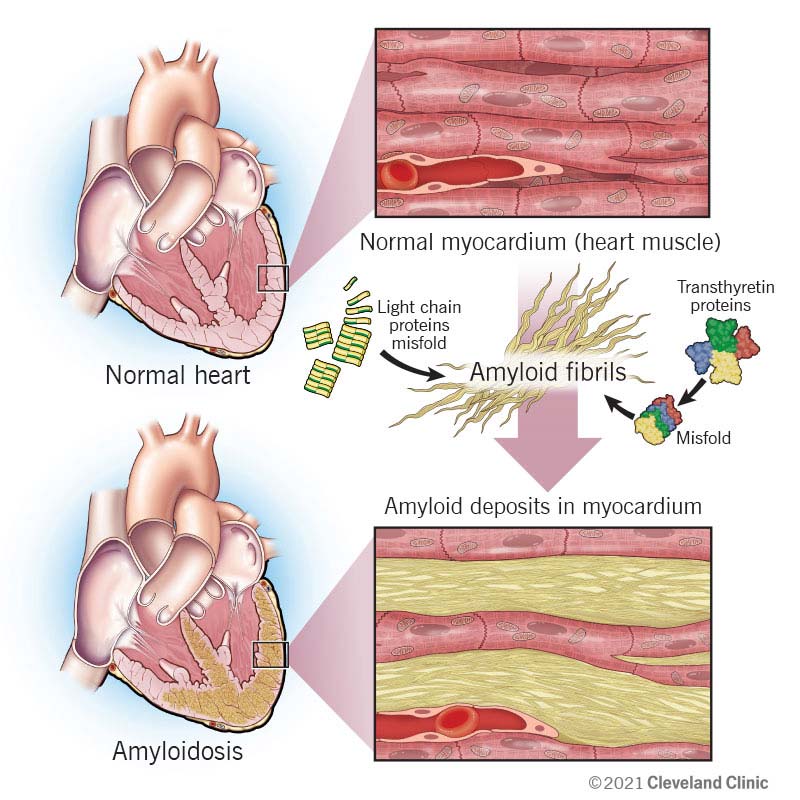
Cardiac amyloidosis is a heart condition where misshapen proteins get stuck in and around different parts of your heart. As these proteins build up, your heart struggles to pump blood so it tries to pump harder. Ultimately, the extra effort weakens and damages your heart, causing it to fail.
There are many possible causes of cardiac amyloidosis. Some people inherit it from their parents. Others can develop this condition on their own, or it can happen because of other diseases like cancer. While amyloidosis isn’t curable, some types are treatable.
What are the different types of amyloidosis?
Proteins are long molecules that stretch out like chains. Your body uses them for energy, internal chemical reactions, sending messages between different body systems and more. But there’s a catch: Your cells can only use these chains if they have the right shape. Protein misfolding disorders like amyloidosis distort and twist proteins so they won’t work properly.
When this happens to enough proteins, they can tangle together and your body can’t use them. With nowhere to go, the tangled proteins bunch up, stick together and then get stuck in different places throughout your body.
Amyloidosis can affect many systems throughout your body, especially your heart. There are three main types of amyloidosis that affect your heart (other types can also affect your heart, but that only happens in rare instances).
AL (light chain)
Your body uses light chains as part of your immune system, which defends against germs like viruses and bacteria. AL amyloidosis happens when cells in your bone marrow malfunction and make too many light chains. This can happen on its own or because of certain types of blood or immune system cancers. Diagnosis of this type of amyloidosis typically happens after age 50.
ATTR
Transthyretin (often abbreviated TTR) is a protein that helps carry certain chemicals throughout your body. It gets its name from how it transports thyroid hormone and retinol (also known as vitamin A). An older name for this protein that’s no longer in use is thyroxine-binding prealbumin (TBPA).
Amyloid TTR (ATTR) can have a wide range of symptoms, and it can appear as early as age 20 or as late as age 70. It has two main sub-types:
Hereditary. This sub-type of ATTR is genetic, meaning you inherit it from one or both of your biological parents.
Wild-type. This happens when TTR begins misfolding on its own without any genetic mutation. This is usually something that happens when you are over the age of 60. This condition was once known as senile systemic amyloidosis or senile cardiac amyloidosis, but these names are no longer commonly used.
Dialysis-related amyloidosis
People who are on dialysis for several years have a higher risk of developing amyloidosis. That’s because dialysis typically doesn’t filter out β2 (beta-2) microglobulin proteins. These proteins, often abbreviated β2Ms, build up in your heart and other areas of your body.
Rare types of cardiac amyloidosis
There are several other subtypes of cardiac amyloidosis, but overall they are very rare. They include:
Subtype
Protein affected
Why does it happen?
AA
Serum protein A.
Usually linked to an immune system condition like rheumatoid arthritis.
AFib
Fibrinogen-α (alpha)
Inherited condition.
AApoAI
Apolipoprotein A-I (1)
Inherited condition.
AApoAII
Apolipoprotein A-II (2)
Inherited condition.
AApoAIV
Apolipoprotein A-IV (4)
Usually linked to kidney problems.
AGel
Gelsolin
Inherited condition.
Who does it affect?
The factors most likely to influence who has this condition include:
Age. Some people may develop amyloidosis in their 20s, but overall the condition is rare in people under the age of 40. Diagnosis usually happens after age 50, especially with wild-type ATTR amyloidosis.
Sex. Cardiac amyloidosis is more common in men than in women. This is especially true with wild-type ATTR amyloidosis, with 25 to 50 cases in men for every case in women.
The country where you were born. A genetic mutation that causes familial ATTR amyloidosis is much more common in some countries. These include Portugal, Japan, Sweden and Finland, as well as several other European countries.
Race. Another mutation that causes familial ATTR amyloidosis happens in approximately 4% of Black people of West African descent. This includes African Americans and Black people from Latin America and the Caribbean.
Regular dialysis for several years. Symptoms of this condition are more and more likely to develop the longer you’ve been on dialysis.
How common is this condition?
Overall, amyloidosis is rare, but certain types of amyloidosis are more common than others.
AL amyloidosis: Doctors in the United States diagnose about 4,000 new cases of AL amyloidosis each year. That’s approximately 1 case for every 64,500 adults.
Hereditary ATTR amyloidosis: This condition may happen in up to 4% of Black people of West African descent. In people of European descent, this condition happens in 1 out of every 100,000 people. That rate is higher in the aforementioned countries. An example of this is Portugal, where it happens in about 1 of every 538 people.
Wild-type ATTR amyloidosis: Experts believe that wild-type ATTR amyloidosis is an underdiagnosed condition, and it may happen in as many as 20% of men over age 80.
Dialysis-related amyloidosis. About 20% of those on dialysis for two to four years have this condition, and virtually everyone on dialysis for 13 years or more has it.
How does this condition affect my body?
Cardiac amyloidosis is a disease that changes the structure of your heart and interferes with the heart’s ability to pump. It does that in the following ways:
Thickening of heart walls. As amyloid proteins build up in your heart muscle, the walls of your heart thicken and your heart enlarges. As that happens, your heart has to work harder to pump enough blood through your body. Your heart’s extra effort ultimately leads to heart failure.
Disruptions in your heart’s electrical system. Cardiac amyloidosis can cause irregular heart rhythms (arrhythmias), or weaken your heart’s electrical current. A type of arrhythmia that’s common with amyloidosis is atrial fibrillation.
Amyloid buildup. Amyloid proteins are waxy, stick together easily and form large clusters. If those clusters get stuck in a heart valve, they can partially block the valve and limit blood flow.
Symptoms and Causes
What are the symptoms of this condition?
Not everyone who has a genetic mutation that can cause amyloidosis will develop this condition. Some won’t ever develop it. Others may have a case that isn’t severe.
Symptoms of cardiac amyloidosis typically involve your heart, plus other vital organs like your liver and kidneys. In the end stages of cardiac amyloidosis, the severe symptoms of heart failure (listed immediately below) are likely.
Possible symptoms include, but aren’t limited to, the following:
Fatigue. This is feeling very tired or exhausted for an extended period, usually days or more.
Heart palpitations. This is the unpleasant ability to feel your heartbeat without trying.
Enlarged neck veins. These happen with heart failure because your heart is struggling to pump hard enough. The extra effort puts too much pressure on the veins in your neck, causing them to get bigger.
Swollen liver (hepatomegaly). This also happens with heart failure, and for the same reason as enlargement in your neck veins. The extra pressure from your heart puts too much pressure on the blood vessels in your liver, making that organ swell up.
Kidney problems. This includes inflammation in your kidneys or changes in how effectively your kidneys are operating.
Symptoms that may also be signs of cardiac amyloidosis, but that don’t involve your heart, liver or kidneys, include:
Unusual bruising.
Swelling in your tongue.
Carpal tunnel syndrome (this can be an early warning sign years before this condition otherwise becomes apparent).
Lumbar spinal stenosis (narrowing in the space around your lower spine).
Different types of amyloidosis happen for different reasons, but most of them involve your DNA.
DNA is much like a family cookbook, containing instructions for your cells on how to work and make certain proteins. Passing DNA from parents to children is like if your parents worked together to make your very own handwritten copy of that cookbook.
Genetic mutations are just typos in your DNA cookbook, and a big enough typo can ruin a recipe. That’s exactly what happens with diseases like amyloidosis. Your cells are doing their best, but they only know how to follow the recipe. These typos can happen to you in two different ways.
Inherited
Cardiac amyloidosis is often familial, meaning you inherited it. This happens when one or both of your parents’ DNA has a mutation and that error in their version of the “cookbook” gets copied over to yours.
Acquired
Acquired conditions are ones that you don’t inherit, meaning you develop them at some point in your life. Wild-type ATTR amyloidosis and dialysis-related amyloidosis are both examples of acquired conditions, but neither of them involves mutations in your DNA.
Wild-type ATTR amyloidosis happens because your body makes the proteins correctly, but the proteins become unstable over time (which is why this condition is so heavily tied to your age). Eventually, the protein misfolds on its own.
Dialysis-related amyloidosis happens because your body has too much of a normal protein that dialysis — unlike your kidneys — can’t filter out. Over time, that protein accumulates to the point where it starts to cause problems.
Is it contagious?
Amyloidosis is not contagious in any form.
Diagnosis and Tests
How is it diagnosed?
A doctor will first suspect cardiac amyloidosis based on a combination of factors, including your symptoms, a physical examination of your body (where the doctor looks, feels and listens for signs of a condition) and your family history. They’ll then use diagnostic tests, imaging and lab tests to confirm or rule out cardiac amyloidosis.
If you have a family history of a familial type of amyloidosis, you may not need to undergo certain tests, or you may need to undergo other tests. Genetic testing is also possible to see if you have any of the genetic mutations that can cause any form of cardiac amyloidosis.
What tests will be done to diagnose this condition?
If your healthcare provider suspects you have cardiac amyloidosis, they may order one or more of the tests listed below.
Lab testing
These tests involve samples of tissue, blood or other bodily fluids. Many of these tests use Congo red, a specific type of dye, which will make amyloid glow green under certain types of lighting.
Tissue biopsy: This is where medical providers take a small sample of tissue, such as from your heart muscle, for lab testing. This can involve tissue samples from other places, but a positive result from a non-heart sample will need confirmation using imaging tests.
Blood testing: Certain types of cardiac amyloidosis involve amyloid proteins circulating in your blood. Lab tests can detect those circulating proteins.
Urine testing. Certain conditions can lead to amyloid proteins in your urine (pee). Testing your urine for those proteins can help diagnose this condition.
Imaging
Because cardiac amyloidosis can cause your heart to enlarge and change shape, imaging tests can often help with diagnosing this condition. Possible tests include:
Echocardiogram. This test uses ultra-high-frequency sound waves like a bat uses sonar. By holding a sound-emitting device against the skin of your chest, medical providers can “see” your heart because of the way sound waves bounce and reflect off different structures inside your body. This test is especially useful in showing when certain parts of your heart are unusually thick, which is a key symptom of this condition.
Scintigraphy. For this test, medical providers will inject a tracer, a substance that is slightly radioactive (but not harmful), into your blood. Areas with accumulations of amyloid proteins will also accumulate that tracer, making those spots extremely easy to see on an imaging test called single-photon emission computed tomography (SPECT) scan.
Magnetic resonance imaging (MRI). This test uses an extremely powerful magnet and computer processing to generate an image of your heart. MRI is extremely detailed, which also allows healthcare providers to see thickening or other relevant changes in your heart’s structure.
Electrocardiogram (ECG or EKG)
An EKG uses several sensors (usually 12) that stick to the skin of your chest. Those sensors detect the electricity traveling through your heart and display the strength of that electrical current as a wave on a paper printout or a screen display. Trained experts, including doctors, can analyze that wave for any unusual changes in how certain parts of your heart conduct electricity.
Genetic tests
Depending on the results of other tests, your healthcare provider may want to run genetic tests. Those tests can identify mutations in your DNA that might be the cause of your amyloidosis.
Management and Treatment
Is there a cure or treatment for amyloidosis?
Most forms of cardiac amyloidosis are treatable, but curing this condition isn’t always possible. The treatment also varies depending on the type of amyloidosis. In general, early detection is extremely important. Catching amyloidosis early can help long-term limit heart damage. Without early detection and treatment, permanent damage is possible. The only way to fix permanent heart damage is a heart transplant.
AL amyloidosis
AL amyloidosis treatment is similar to many common treatments for treating cancer. These include:
Chemotherapy. Similar to its use in cancer, chemotherapy can destroy the malfunctioning plasma cells.
Stem cell transplant. This treatment usually happens along with chemotherapy and replaces the malfunctioning plasma cells. The stem cells are usually autologous, meaning they come from you. Because they’re yours, your body already recognizes them and won’t reject or negatively react to them.
Immunotherapy. Your immune system can ordinarily recognize malfunctioning cells as hostile and destroy them. With diseases like cancer or AL amyloidosis, your immune system doesn’t recognize that those cells are faulty. Immunotherapy teaches your immune system to see the malfunctioning cells and destroy them.
ATTR amyloidosis
This type of amyloidosis happens because your liver is making proteins that break apart too easily. Treating this problem always involves putting a stop to that. The following list includes some methods that have government approval and some that are still experimental.
Liver transplant. In years past, the only way to stop your liver from making faulty proteins was a liver transplant. While this is no longer the only option, it’s still a helpful and effective one.
Genetic silencers. ATTR amyloidosis happens because of a genetic mutation in your DNA, much like a typo in a cookbook recipe. Genetic silencers are drugs that act as a temporary recipe card. Instead of your cells following the recipe with a typo, this medication gives them new instructions so they can make the protein correctly.
Stabilizers. These medications keep TTR molecules from misfolding or breaking apart.
Fibril inhibitors. When amyloid proteins start to clump together, they form fiber-like structures called fibrils. These medications stop fibrils from forming.
Dialysis-related amyloidosis
This type of amyloidosis happens because people who need dialysis have a buildup of β2M proteins. Normally, your kidneys filter out those proteins, but standard dialysis can’t do that. That’s why it takes years for people on dialysis to develop this condition. Currently, there are two ways to treat this:
Kidney transplant. A healthy kidney means you don’t need dialysis anymore, and a transplanted kidney can filter out excess β2M proteins. While a kidney transplant will stop dialysis-related amyloidosis from getting worse, there’s disagreement among researchers on whether or not it also reverses amyloid protein buildup in your body.
Special filters. While standard dialysis filters can’t remove β2M proteins, there are specialized filters that can at least partially remove them. Unfortunately, these filters are costly, and they don’t filter out all of the proteins. That means that years of dialysis will eventually lead to dialysis-related amyloidosis even with preventive measures.
Non-specific treatments
There’s a wide range of other treatments and medications that can help people with cardiac amyloidosis. These typically treat symptoms of this condition and usually involve the following:
Heart transplant. For people whose hearts have too much damage because of cardiac amyloidosis, a heart transplant is sometimes necessary. This procedure often happens after resolving or treating the underlying cause of the amyloidosis.
Anti-arrhythmia medications. These medications help prevent irregular heart rhythms, some of which can be dangerous.
Implantable devices. These devices include pacemakers and implantable cardioverter defibrillators (ICDs). They deliver electrical shocks to manage your heart rhythm and prevent dangerous arrhythmias.
Diuretic medications. These medications are especially helpful with fluid buildup, a common symptom of heart failure, by improving your kidney function. However, these medications aren’t an option if you have conditions like severe kidney disease.
Doxycycline. AL amyloidosis light chains also are toxic to your heart cells. For reasons experts still don’t fully understand, the antibiotic doxycycline can counter the toxic effects.
Complications/side effects of the treatment
The possible complications and side effects of this condition vary widely. Below are some of the general possibilities. However, your healthcare provider can better explain complications, side effects and other risks. That’s because they are the ones who know your case directly and can tailor their information and explanations to your specific situation.
Medications
Allergic reactions and adverse effects are possible with all medications regardless of what they treat. In the case of immunotherapy or other highly specialized medications (genetic silencers, stabilizers and fibril inhibitors), the possible side effects or complications are very specific to the medication(s) you take. Talking to your healthcare provider is the best way to learn the likely or possible side effects of any medication, especially those that treat specific symptoms or problems.
Chemotherapy medications
These medications damage cells that reproduce quickly. This includes cells that are cancerous and malfunctioning (which may also cause amyloidosis). However, they also damage normal cells that behave similarly, such as your hair follicles (causing your hair to fall out), your gastrointestinal tract (causing vomiting and diarrhea) and more.
Organ transplants
Replacing a damaged or faulty organ with a donor organ is a complicated process that has risks. These include:
Rejection. This is when your body sees the new organ and mistakes it for a threat, much like an infection. Your immune system then attacks the new organ, which can cause complications that are dangerous or even deadly.
Immune system suppression. Preventing rejection involves medications that intentionally weaken your immune system. Unfortunately, that also means your immune system is less effective at stopping actual infections, whether they are viral or bacterial.
Implanted devices
Pacemakers and ICDs require surgery to be placed and maintained. Those surgeries have their own potential risks and complications, including bleeding, infection, or negative reactions to anesthesia. The devices themselves can sometimes cause heart rhythm problems, or part of the device may move out of place and cause complications.
How soon after treatment will I feel better?
Treatment of cardiac amyloidosis usually manages your symptoms only. Some of these treatments can provide some relief, but the effects are only temporary. In some cases, the treatment will cause side effects that might make you feel worse for a while, but your healthcare provider can also provide medication and guidance to help reduce the severity of those side effects.
Chemotherapy effects
If you take chemotherapy for this condition, your healthcare provider can best explain to you what you will likely experience. Chemotherapy medications can cause a wide range of side effects, including weight loss, nausea and vomiting, loss of hair and more. However, the effects are temporary, and your healthcare provider can help with treatments for the symptoms of side effects.
Dialysis filtering changes
If you have dialysis-related cardiac amyloidosis, you should start to feel better as special filtering methods pull the problem proteins out of your body. However, it may take multiple treatments before you feel better.
Transplants
If you undergo any kind of transplant, this is major surgery, and it will take you time to recover from the procedure itself. Your healthcare provider will be the best person to explain what you can expect, especially the timing of your recovery and when you should notice improvements in your symptoms.
If you have a liver or kidney transplant, you should start to feel improvement in your cardiac amyloidosis symptoms within the weeks that follow the procedure. However, some symptoms may linger because of damage or changes to your heart from this condition.
If you have a heart transplant, you should start to feel some relief from your symptoms within the weeks that follow this surgery. A heart transplant is usually only possible after treating or curing your amyloidosis. Controlling the amount of amyloid produced in your body or curing the amyloidosis altogether are essential to preventing the condition from damaging your new heart.
Prevention
How can I prevent this or reduce my risk of developing it?
Unfortunately, it’s not possible to prevent amyloidosis (with one exception, see below). The cause of non-inherited amyloidosis is unknown, so there’s no way to prevent it. Inherited amyloidosis is also not preventable because it’s carried in your DNA, which you inherited from your parents.
The only exception to this is dialysis-related cardiac amyloidosis. Preventing this condition may be possible if you are not on dialysis for an extended period or with the use of special filters to keep β2M proteins from accumulating. However, the filters usually can’t stop the accumulation entirely, meaning this is often only a way to delay this condition from developing.
Outlook / Prognosis
What is the outlook for this condition?
Cardiac amyloidosis is a condition that gets progressively worse, with heart failure symptoms that become more and more severe. Ultimately, this condition causes your heart to weaken to the point where you can’t survive. If it isn’t treated, the outlook is especially bad.
Without treatment, the typical survival time with AL amyloidosis is less than eight months. For those with especially severe cases, it’s three to six months. With ATTR amyloidosis, the typical survival time without treatment is two to five years. People with untreated familial ATTR amyloidosis tend to do worse, with an average survival time of two to three years.
While dialysis-related amyloidosis does often affect your heart, other effects in your body — especially on your joints and bones — are more severe. Research and data on long-term heart effects from dialysis-related amyloidosis are also limited because the condition is less common, thanks to improved filters and methods.
How long does cardiac amyloidosis last?
Cardiac amyloidosis is usually life-long. Once you develop this condition, the only way to keep it from being permanent is with a heart transplant. However, if you still have an underlying cause for your amyloidosis, the condition can return after a heart transplant.
What is the prognosis with treatment?
The prognosis for cardiac amyloidosis strongly depends on two factors: What type of amyloidosis you have and the severity of your case. That’s why early detection can make a big difference. People who undergo successful transplants of their heart, kidneys or liver typically do better, but the majority of people who need a transplant either aren’t eligible or have to wait a very long time to receive one (which can affect how long they survive).
The typical survival times for AL and ATTR amyloidosis (there’s limited data on dialysis-related amyloidosis survival) are as follows:
AL amyloidosis: In the earliest stages, just under 70% of people survive five years or more. In later stages, that falls to 14%.
ATTR amyloidosis. In the earliest stages, the median (similar to the average, but without distortion from unusually high or low numbers) survival was more than seven years. In the latest stages, the median survival was between 18 months and two years.
Living With
How to take care of myself or manage my symptoms?
Unfortunately, there’s not much you can do to directly help amyloidosis once you have it. If you have a family history of this condition, you should talk to your provider about genetic testing. While not everyone who has a mutation related to cardiac amyloidosis will develop this condition, it’s important to know if you can develop it. That way, you can watch for symptoms and start treatment quickly.
If you do have cardiac amyloidosis, it’s important to follow your healthcare provider’s guidance when it comes to medications and treatments. Many of these medications work in very specific ways, and for them to work properly, it’s essential that you take them as your provider instructs.
When should I see my healthcare provider or when should I seek care?
Your healthcare provider will schedule regular follow-up visits after diagnosing you with cardiac amyloidosis. Depending on the severity of your case, you may need more frequent visits with your provider.
Your healthcare provider will also be able to tell you the symptoms that need medical attention. However, in general, you should contact your provider if you have any of the following symptoms:
Dizziness or fainting when you sit or stand up. Known as orthostatic hypotension, this happens because low blood pressure decreases the blood flow to your brain when you get up too quickly.
Swelling in your limbs or abdomen. This usually happens because of fluid buildup in your body.
Sudden, noticeable weight loss. This is an important symptom, especially if you aren’t trying to lose weight.
When should I go to ER?
Because cardiac amyloidosis can severely disrupt your heart function, some of the symptoms are signs that you need immediate medical care. Some of those include:
Heart palpitations.
Unusually fast, slow or irregular heart rhythms.
Struggling to breathe for any reason.
A note from Cleveland Clinic
Cardiac amyloidosis is one of the most common conditions that happen with any of the specific amyloidosis disorders. While this condition is progressive, can cause severe symptoms and is ultimately deadly, early detection can improve your outlook. In some cases, it’s possible to cure this condition with organ transplants. There are also new medications and treatments, which mean that many people with this condition can manage their symptoms and survive for several years after they develop the condition.
It’s not your imagination. Losing weight after age 50 really is more challenging. But that doesn’t mean you have to accept weight gain as an inevitable part of the aging process.
Why is it harder to lose weight after 50?
A number of lifestyle and physiological factors conspire to make dropping a few pounds more onerous than it was at 35 or 40 (not that it was easy then). The culprits include arthritis and other conditions that can affect stamina, mobility and balance; sleep and stress issues; dwindling muscle mass; and declining levels of the sex hormones estrogen and testosterone.
The hormones that regulate appetite and satiety — such as ghrelin from the gut and leptin from fat cells — also have their way with us in middle age, making it even more challenging to stay true to a healthy eating plan.
That’s not to say everyone is destined to battle the bulge.
“Not all people over 50 will experience the same degree of difficulty with weight loss as genes determine 40 to 70 percent of what your weight is at a given time,” says Holly Lofton, M.D., director of the NYU Langone Medical Weight Management Program in New York City.
By age 50, you’ve lost about 10 percent of your muscle mass, according to the American College of Sports Medicine. It’s not just a cosmetic concern: Dwindling muscle mass impacts the way you burn calories. “Muscle is more metabolically active — it burns more calories than fat,” explains William Yancy Jr., M.D., director of the Duke Lifestyle and Weight Management Center in Durham, North Carolina. “So having a higher ratio of muscle to fat will mean you burn more energy — just while sitting. To build that muscle, you have to exercise, and that burns calories, too.”
All exercise is good, of course, but strength training — such as lifting weights — is the secret to building muscle. That goes for both men and women. A review of studies published in 2021 in Sports Medicine shows that strength training (sometimes called resistance training or weight training) isn’t just a guy thing: Women 50 and older reap just as many benefits. Aim for two to three weight training sessions a week.
AARP NEWSLETTERS
Get the Your Health newsletter from AARP
Sign up for the latest health news, fitness and nutrition updates and more!Subscribe
The number of calories you need each day drops slightly as you age, but most people keep eating the same amount of food. The government’s dietary guidelines advise that you burn approximately 200 fewer daily calories after age 50. The best way to make that happen? Combine calorie cutting (to get into the habit, try using a calorie-counting app like MyFitnessPal, Cronometer, or MyNetDiary) and strength training.
A landmark study published in 2017 in the journal Obesity enlisted 249 people 60 and older to compare the effectiveness of diet and exercise on their fat and muscle composition. The participants were divided into three groups. One group was asked to cut about 300 calories a day from their diets. Another group cut calories and also did about 45 minutes of aerobic exercise four times a week. The third group combined calorie-cutting with strength training. After 18 months, those who combined diet and exercise lost the most weight (20 pounds on average). But the strength-training group lost more fat (18 pounds) and less muscle (only 2 pounds) than the aerobic group.
Drinking plenty of fluids is important for overall health—adults who aren’t well hydrated may age faster and face a higher risk of chronic diseases than their well-hydrated counterparts — and it plays an equally important role in maintaining a healthy weight.
When you drink water, your body goes through a process known as thermogenesis to bring the liquid to body temperature. Since that process requires energy, you essentially burn calories and get a metabolism boost just by drinking H20. Fluid intake is also important to the complex cycle of converting protein and carbohydrates into usable energy, Lofton notes. Aim for eight glasses of water a day, and try to eat more foods with high water content (like fruits and vegetables).
4. Break a sweat
Although strength-building activities help preserve muscle that keeps your metabolism revving, cardio exercise is important, too, says Yancy, who suggests a combination of the two. The Centers for Disease Control and Prevention suggests at least 150 minutes of moderate-intensity cardio—such as brisk walking—per week.
5. Curb your sweet tooth
Cutting back on sweets seems so obvious, it’s hardly worth mentioning. But there’s more at play than just empty calories.
With age, declining levels of estrogen and testosterone set the body up for storing fat in just the spot—your abdomen—that makes dropping pounds more challenging. Excess sugar, already a leading cause of belly fat, only exacerbates things by spiking insulin levels. Over time, this can lead to insulin resistance, which furthers weight gain and makes weight loss difficult, Yancy says.
6. Avoid late-night snacking
Not only does eating late increase hunger and alter appetite-regulating hormones, it also reduces the number of calories burned throughout the day, as compared with early eating, found a study in Cell Metabolism. As if that weren’t enough, late-night eaters are also more apt to store fat in their abdomen.
7. Check what medication you’re taking
Some drugs — most notably for conditions that are exacerbated by excess weight, including heart disease and type 2 diabetes — can cause weight gain. A study published in Obesity found that more than 20 percent of adults in the United States take at least one medication that causes weight gain, the most common being some beta-blockers and diabetes drugs such as insulin and sulfonylureas.
“Medications such as hormones, steroids and some antidepressants can also cause weight gain,” Lofton says. “The longer you take these types of meds, the more the body can store larger, more stubborn fat cells.”
If weight loss is challenging and you’re taking any of the above medications, “seek medical attention specifically to address your individual weight management options,” Lofton suggests. There may be alternative meds that don’t cause weight gain.
8. Get plenty of sleep
Research consistently shows a link between sleep deprivation and weight gain. One study in BMJ Open Sport & Exercise Medicine found that sleep-deprived participants not only ate more the next day, but they also reached for high-calorie fare. A lack of sleep may affect the body’s regulation of the hormones ghrelin (boosts appetite) and leptin (inhibits hunger), too.
Go to bed and get up at the same time every day, because big swings in your sleep schedule can affect your metabolism. If you struggle to make that happen, creating a bedtime ritual to signal the body and mind to slow down may help. This could include turning off all devices, changing into pajamas and brushing your teeth at least an hour before sleep.
9. Weigh yourself regularly
Every morning or every week, it’s up to you. Just make sure you step on the scale at the same time of day for each weigh-in so you can get a more accurate picture of how your weight loss efforts are paying off. A two-year study found that frequent weigh-ins and tracking results on a chart were effective for both losing weight and keeping it off, especially for men.
10. Set S.M.A.R.T. weight loss goals
Research shows you’ll up your odds of losing weight if you set goals that are:
Specific: Instead of more fruits and vegetables, you’ll eat five servings of fruit and vegetables every day.
Measurable: You’ll log 10,000 steps per day on your activity tracker.
Attainable: Rather than promising yourself you’ll go to the gym every day, start with three days a week.
Realistic: You’ll curb your soda habit by choosing sparkling water on four out of five occasions.
Time-bound: Mark the start date of your new eating plan on your calendar.
11. Set a S.M.A.R.T. goal to swear off ultraprocessed foods
Cured meats, baked goods, pretty much everything you find on the snack aisle—these are all out to sabotage your weight loss efforts. In a small study, participants were put on a diet of unprocessed foods (fruits, vegetables, lean meats, and whole grains) or ultra-processed foods. Participants were presented with the same amounts of overall calories, protein, and carbohydrates, and were allowed to eat as much as they wanted. After fourteen days, the dieters switched to the opposite plan.
The participants ate 500 calories a day more, on average, when they ate ultraprocessed fare than when they were given whole foods, and—no surprise—they gained, rather than lost weight.
12. Excuse-proof your exercise routine
Pick a gym close to home, enlist an exercise buddy, hire a personal trainer, schedule workouts as you would any must-keep appointment. On the days you’d rather do anything but work out, any—or all—of these will help keep you accountable.
13. Put your eating plan on autopilot
Advance meal prep is one of the easiest ways to stick to any eating plan. Set aside a few hours over the weekend to prep what you need for the week ahead: quinoa or brown rice, beans or lentils, roasted vegetables, grilled chicken breasts—these can all be cooked in advance, stored in the fridge and reheated on the fly.
14. Try HIIT
All cardio — including walking, cycling and jogging — counts, but alternating between low-intensity and high-intensity moves has been shown to provide a greater boost to your metabolism than moderate-intensity exercise alone. If you work in high-intensity interval training (HIIT) in the morning, research shows, you may get the most effective metabolism boost for the rest of your day.
15. Eat more whole grains
Whole grains such as oats, quinoa, and brown rice contain all the parts of the kernel—even the tougher, harder-to-digest bits—so your body uses more energy to break them down. When study participants ages 40 to 65 consumed the same number of calories, but swapped refined white flour and rice for whole grains, they burned nearly 100 extra calories per day.
16. Get plenty of protein
It isn’t just lack of physical activity that leads to a loss in muscle mass; inadequate protein intake also figures in. Seek out high-quality protein sources such as eggs and low-fat meats, as well as possible high-quality nutritional supplements, suggests Lofton. A study published in 2020 in The American Journal of Clinical Nutrition found that a diet higher in protein was associated with less loss of muscle mass over three years in women ages 70 to 79, particularly Black women. Another study suggests that eating equal amounts of protein at all three meals boosts muscle strength and, by extension, metabolism in adults over 67.
17. Sit less
Whether it’s because of stiff joints, low energy, or lack of time, we become less active as we get older, research suggests. A study published in 2019 in the Journal of Geriatric Physical Therapy suggests that older adults spend 60 to 80 percent of their waking hours sedentary. No surprise: that impacts weight loss.
What is surprising: It isn’t just the major sweat sessions that burn calories. In a study published in the journal Nutrients, researchers looked at the effect of walking speed on weight loss in previously sedentary postmenopausal women. Their findings suggest that although total body fat is lost at all speeds, the change is initially greater in slow walkers (defined by the researchers as about 3.5 miles per hour) who are overweight. Not sure how physically active you are over the course of the day? Wear an accelerometer to track your steps and intensity of daily activity, Lofton suggests.
18. Eat until you’re satisfied
Many of us wonder, “Should you eat until you are full?” The answer is, “Mind your hara hachi bu point.” In Japanese, this means to eat until you’re 80% full. Your aim should be to feel satisfied and not hungry anymore, rather than full, the Cleveland Clinic recommends.
19. Keep your metabolism humming
Conventional wisdom has long held that metabolism slows with age, but research challenges that assumption. According to a study published in 2021 in the journal Science, metabolism actually holds steady from ages 20 to 60 — so long as your muscle mass doesn’t change — then declines by about 0.7 percent a year after 60. Though seemingly insignificant, that less-than-a-percentage-point-per-year slowdown can add up over the years and have an impact, Yancy says.
Your resting metabolic rate — meaning the number of calories your body burns when you’re doing nothing — can decrease if your muscle mass decreases as you age, Lofton says. If we don’t adjust our eating and exercise habits to accommodate that metabolic change, the weight can creep up over the years.
20. Rethink happy hour
It isn’t just the calories in that glass of wine that add up over time; research shows that booze can do a number on all your good intentions. One study suggests that alcohol can trigger hunger signals in the brain, leading to an increased urge to eat more.
Editor’s Note: This article, originally published June 15, 2021, has been updated to reflect new information.
12 Foods You Should Stop Putting in the Refrigerator
Not all groceries belong in the fridge. Some foods are best kept at room temperature.
By
Credit: Eating Well/Getty Images
It’s tough to keep track of all of the “rules” when it comes to food safety, especially when it comes to storage. Some foods need to be refrigerated, while others are fine to leave out on the counter or in the pantry. We’ve compiled a list of foods that do best when kept out of the refrigerator, along with how to store certain foods once cut.
1. Fresh Tomatoes
“Tomatoes retain the best flavor and texture when kept at room temperature,” says Chef Jess Swift Harrell, RDN, IFNCP. Cut or overly ripe tomatoes, she adds, can be refrigerated to help slow the ripening process—though it may impact flavor and texture. She suggests, then, buying fresh tomatoes with a plan in mind so you can enjoy their full flavor potential.
2. Apples
You can store apples in the refrigerator, but they’re actually fine when kept in a mesh bag or wire basket in a cool, dark place, such as your pantry. Like others on the list, once apples are cut, it’s best to store them in the refrigerator. Toss them with a little lemon juice to help prevent browning and use them within one to two days.
3. Onions
You might be tempted to throw your onions in the vegetable crisper drawer in the refrigerator, but you don’t have to. Store them in a spot with good air circulation, that’s dark and cool. They can last up to two months if stored that way. Cut onions should be placed in resealable containers and refrigerated; use them within one week.
“Putting bananas in the refrigerator can hinder their ripening process,” says Chef Julie Lopez, RD, “causing the peel to turn black while the flesh may not fully ripen. The result is a banana that doesn’t have the taste or texture of a banana allowed to ripen on the counter. Even really ripe bananas can stay on the countertop, says Phoenix-based dietitian Rhyan Geiger.
5. Bread
If you’ve got a fresh loaf of bread, it’s best to store it in an airtight container or bread bag on the counter. Geiger says that “storing bread in the fridge will cause it to dry out much faster than bread stored at room temperature.” Keep the bread in a dark, cool spot and enjoy it within three days. Once those three days are up, transfer it to a freezer-safe container and use it within six months.
Unlike other herbs, basil should never go in the fridge because it will turn the leaves mushy and black, says Mandy Enright, the Food + Movement Dietitian, worksite wellness specialist and author of 30-Minute Weight Loss Cookbook: 100+ Quick and Easy Recipes for Sustainable Weight Loss. Instead, she says, keep basil at room temperature with the stems placed in a few inches of water. Store the basil in a shaded area away from direct sunlight and change the water every few days.
7. Eggplant
Chef and registered dietitian Abbie Gellman recommends storing eggplant at room temperature. This temperature-sensitive vegetable can become mushy and bitter when stored in the fridge, so store it in a cool, dry place and use it within a few days of buying. Gellman also recommends keeping eggplants away from bananas, which can cause them to ripen too quickly (because of ethylene gas).
8. Watermelon & Other Melons
If you’re bringing home whole melons, like cantaloupe, honeydew and watermelon, it’s often best to store them on the countertop. Stephanie Barlow, senior director of communications with the Watermelon Board, adds that there is a caveat to the countertop rule of thumb, and that has to do with how the melon was being held during transportation. For example, she says, “If a whole watermelon is cold when you purchase it, it’s been refrigerated, and you’ll want to continue to keep that cold temperature in place.” If that’s the case, she recommends cutting the melon immediately for easier storage in the refrigerator. Cut melon should always be stored in an airtight container in the refrigerator and enjoyed within two to three days.
“There have been so many TikTok videos on testing olive oil in the fridge for authenticity or to extend shelf life,” says Chrissy Arsenault, M.B.A., RDN, a registered dietitian at Pompeian, “but it doesn’t need to be refrigerated.
“Since extra-virgin olive oil contains monounsaturated fats,” she says, “it will crystallize and/or solidify at a wide variety of time and temperature exposures. Once the olive oil is brought back to room temperature, the oil will return to its liquid state.” Arsenault points to research that suggests that repeated heating and cooling—such as storing it in the fridge between uses—puts stress on the oil and doesn’t necessarily extend the shelf life, so don’t bother. She recommends storing olive oil tightly capped and in a cool dark cupboard or pantry and for best results, use within a few months of opening.
10. Potatoes
Unwashed spuds prefer to be stored in your pantry, in a spot that’s well-ventilated, cool and dry. They should be used within two weeks. Avoid warm temperatures and light, which can cause them to sprout, wrinkle and soften and also turn green. Whole potatoes shouldn’t be refrigerated either, the cold will darken them and may also make them sweet. Store cut potatoes in cold water and use them within the next day.
Several condiments, including soy sauce, hot sauce, peanut butter (but not the natural kind) and honey, don’t need to be refrigerated. If your condiment contains dairy or eggs, though, it’s best to keep it in the refrigerator. Refer to package instructions, too, as many will specify if the product should be refrigerated after opening. Shelf-stable condiments are best stored in cool, dark spots in the kitchen or pantry, and lids should be tightly sealed.
12. Avocados
Unripe and even ripe avocados can last on your countertop for days. If your avocado needs time to ripen, leave it out and keep a banana nearby to expedite the process (bananas contain ethylene gas that promotes ripening in other fruits too). Ripe avocados will be fine on the counter for a few days, but if yours is fully ripe, it’s OK to move the uncut fruit to the refrigerator.
The Bottom Line
Some foods actually taste better and last longer when kept out of the refrigerator. A dark, cool, well-ventilated spot is often best. Foods that have been left out to ripen should be used within a short time once ripe. All of that being said, do keep in mind that once a food, like a fruit or vegetable, is cut, it should be refrigerated.
You may have too much vitamin D if you experience stomach discomfort, unusual mental symptoms, or kidney problems. Excessive vitamin D also shows up in a blood test.
1 second of 54 secondsVolume 0%
Vitamin D plays an important role in maintaining health. It’s necessary for the growth and development of your muscle cells, proper functioning of the innate and adaptive immune system, maintenance of the health of your skeletal system, and more.
Because vitamin D deficiency is more common, many people use vitamin D supplements to maintain healthy vitamin D levels. But too much vitamin D can also lead to health problems.
In order for vitamin D to reach toxic or dangerous levels in the body, it needs to exceed 100 nanograms (ng) per milliliter (mL).
Excess vitamin D is defined as blood vitamin D levels over 100 ng/mL, while vitamin D intoxication or hypervitaminosis D is defined as serum levels over 150 ng/mL.
Recommendations on optimal vitamin D levels vary, but research suggests that levels between 30–60 ng/mL are likely optimal and may help protect against illness and disease.
Even when taking high dose vitamin D supplements, it’s unlikely that a healthy person’s blood vitamin D levels would come close to reaching excessive or toxic levels.
Most cases of vitamin D toxicity are caused by inappropriate supplement dosing and prescription errors.
For example, in a 2020 case report, a 73-year-old man developed vitamin D toxicity after taking 10,000 IU of vitamin D per day for many years.
In another 2020 case report, a 56-year-old woman who took an average of 130,000 IU of vitamin D per day for 20 months in hopes of improving symptoms of multiple sclerosis was hospitalized for symptoms including nausea, vomiting, and muscle weakness.
Her vitamin D levels were discovered to be 265 ng/mL, which equals 130,000 IU and is over 30 times the generally recommended safe upper limit of 4,000 IU per day.
Keep in mind that people who are low or deficient in vitamin D may need to take much higher levels than the safe upper limit to reach and maintain optimal vitamin D levels.
However, make sure to consult a healthcare professional on what dosage you should take. This will help you avoid potentially inappropriate or dangerous dosing.
Elevated blood calcium levels
Vitamin D helps your body absorb calcium from the food you eat. In fact, this is one of its most important roles.
However, if your vitamin D intake is excessive, your blood calcium may reach levels that can cause unpleasant and potentially dangerous symptoms.
The symptoms of vitamin D toxicity are primarily related to hypercalcemia, which means excessively high blood calcium levels.
Symptoms of hypercalcemia include:
digestive distress, such as vomiting, nausea, constipation, and stomach pain
fatigue, dizziness, hallucinations, and confusion
loss of appetite
excessive urination
kidney stones, kidney injury, and even kidney failure
high blood pressure and abnormal heart rhythms
dehydration
The normal range of blood calcium is approximately 8.9–10.1 mg/dL, though it may vary.
Hypercalcemia typically develops after people take megadoses of vitamin D for a prolonged period of time.
Research shows that adults taking more than 10,000 IU of vitamin D daily who exhibit symptoms should be evaluated for hypercalcemia.
In the 2020 case report mentioned earlier, the woman who took an average of 130,000 IU of vitamin D per day for 20 months was also hospitalized for symptoms related to hypercalcemia.
These included nausea, vomiting, muscle weakness, and kidney injury. Her blood calcium levels were 3.23 mmol/L (12.9 mg/dL).
Hypercalcemia can be life threatening and requires immediate medical attention.
Gastrointestinal symptoms
The main side effects of excessive vitamin D levels are related to excessive calcium in the blood.
Some of the main symptoms of hypercalcemia include:
nausea
vomiting
constipation
diarrhea
poor appetite
However, not all people with hypercalcemia experience the exact same symptoms.
One woman experienced nausea and weight loss after taking a supplement that was later found to contain 78 times moreTrusted Source vitamin D than stated on the label.
Importantly, these symptoms occurred in response to extremely high doses of vitamin D3, which led to calcium levels greater than 12 mg/dL.
For example, in another 2016 case study, an 18-month-old child who was given 50,000 IU of vitamin D3 for 3 months experienced diarrhea, stomach pain, and other symptoms. These symptoms resolved after the child stopped taking the supplements.
Altered mental status
Hypercalcemia can lead to altered mental status in people with vitamin D toxicity.
People with vitamin D toxicity–induced hypercalcemia commonly have symptoms like confusion, depression, and psychosis. In extreme cases, coma has been reported.
In a 2021 case report, a 64-year-old man accidentally took 200,000 IU of vitamin D per day because he misunderstood medication instructions. He showed altered mental status and other serious symptoms related to hypercalcemia.
He remained agitated and confused for the first 10 days of his stay in the hospital, but his symptoms gradually improved as his calcium levels dropped. It took about 18 days for his calcium to return to the expected levels.
Kidney complications
In some cases, vitamin D toxicity can result in kidney injury and even kidney failure.
This is because having too much vitamin D in the body can lead to high levels of calcium, which can lead to water loss through too much urination and calcification of the kidneys.
Hypercalcemia can also cause the blood vessels of the kidneys to constrict, which leads to decreased kidney function.
Indeed, many studies have reported moderate-to-severe kidney injury in people who develop vitamin D toxicity.
Interestingly, a vitamin D deficiency can also harm the kidneys and lead to severe complications in those with kidney disease. That’s one reason why maintaining optimal blood levels of vitamin D is critical.
Vitamin D supplements are considered very safe, and toxicity is uncommon. This is because a healthy person would need to take extremely large doses of vitamin D over time in order to reach toxic or dangerous levels in the body.
However, vitamin D toxicity is more common in people with certain medical conditions. These include:
granulomatous disorders
congenital disorders
some lymphomas
dysregulated vitamin D metabolism
Although uncommon, vitamin D toxicity can occur, especially in cases of:
accidental overdose
prescription errors
misuse of high dose vitamin D supplements
Vitamin D toxicity goes by a few other names, including hypervitaminosis D and vitamin D intoxication.
Healthcare professionals may recommend people who are very low in vitamin D take very high weekly doses of 50,000 IU for 8 weeksTrusted Source, followed by a maintenance dose of 2,000 IU per day after their levels reach 30 ng/mL.
Your doctor will decide the most appropriate dose of vitamin D for you, depending on your vitamin D levels and your overall health.
Even though vitamin D toxicity isn’t common, you may be at risk if you misuse over-the-counter vitamin D supplements, prescription vitamin D supplements, or injections.
If you’re taking very high dose vitamin D supplements or are receiving vitamin D injections, your doctor will monitor your vitamin D levels to ensure they aren’t becoming potentially dangerous.
Avoid taking high dose vitamin D supplements unless your healthcare professional recommends them.
How Much Vitamin D Do You Need and Where Does it Come from?
Watch this video to learn the benefits of vitamin D, plus information about downsides, how much you need, and foods that are rich in vitamin D.
Vitamin D has three main functionsTrusted Source in your body. It helps your body absorb calcium, helping to prevent osteoporosis, it helps your muscles and nerves work properly, and it’s essential for your immune system to fight off bacterial and viral infections.
What happens to your body when you take the recommended amount of vitamin D every day?
If you take vitamin D every day, you may experience several benefitsTrusted Source, your bones may be stronger, your muscles and nerves may work correctly, and your immune system may get help fighting bacterial or viral infections.
What are the major effects of vitamin D?
Positive effects of vitamin D may include stronger bones, correct muscle and nerve function, and fewer illnesses caused by bacteria or viruses.
Vitamin D is extremely important for your overall health. Even if you follow a healthy diet, you may require supplements to achieve optimal blood levels.
However, it’s also possible to have too much of a good thing. Make sure to avoid excessive doses of vitamin D. Generally, for people with adequate vitamin D levels, taking supplements of 4,000 IU or fewer per day is considered safe.